
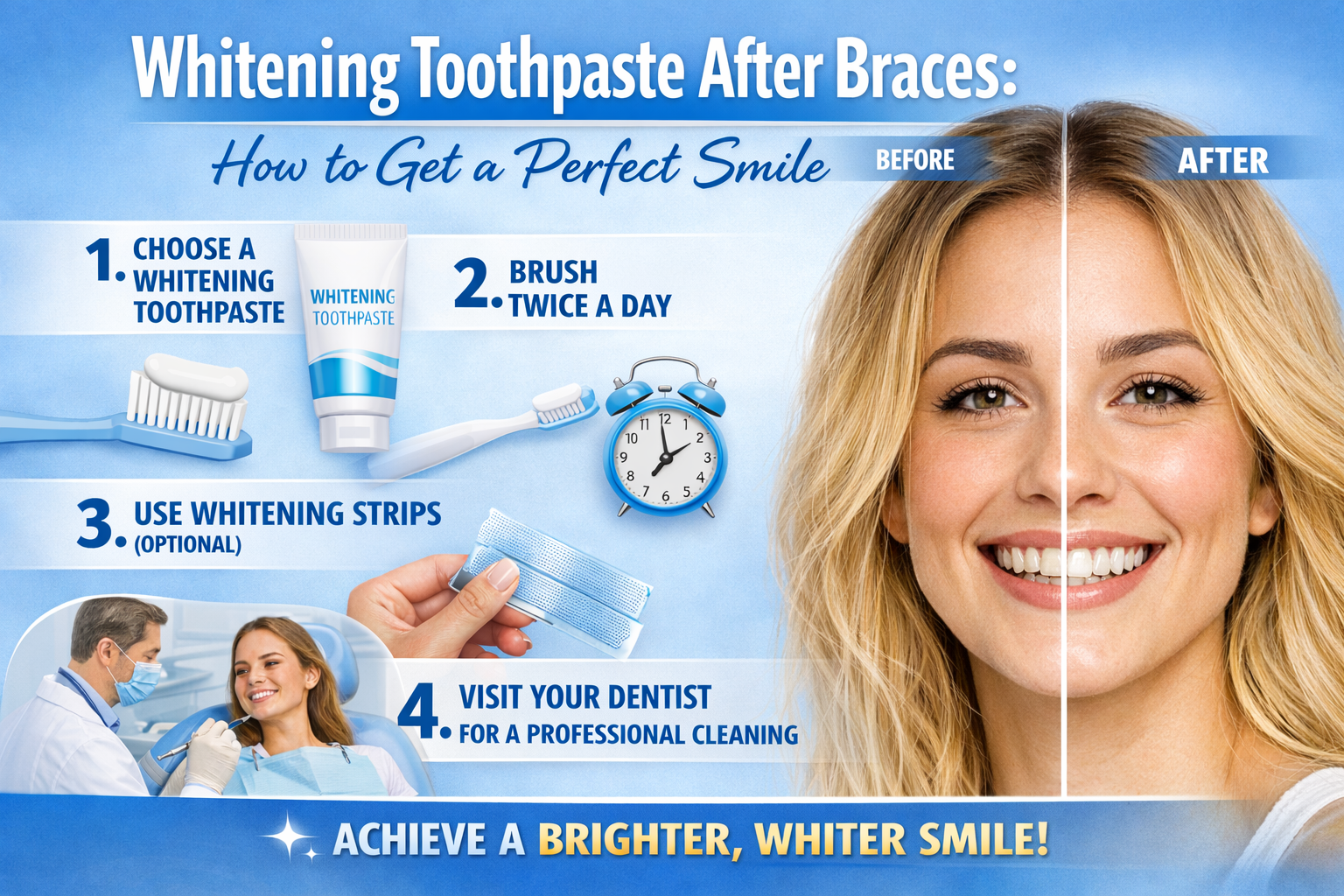
Whitening Toothpaste After Braces: How to Get a Perfect Smile
The day your braces come off is a monumental milestone. After months—or years—of metal brackets, wires, and tightening appointments, you are finally ready to reveal your straight smile to the world. However, many patients notice that while their teeth are perfectly aligned, the color isn’t quite as radiant as they hoped. You might see “shadows” where the brackets once sat or general yellowing from the difficulty of cleaning around hardware. This naturally leads to the search for the best whitening toothpaste after braces.
While you are likely eager to start scrubbing away those stains immediately, the period following orthodontic treatment is a delicate time for your teeth. Your enamel has been protected in some areas and exposed in others, and your gums may still be slightly tender. In this guide, we will explore how to safely integrate whitening products into your new routine, what ingredients to look for, and why timing is the most important factor in achieving that flawless, Hollywood finish.
Why Do Teeth Look Stained After Braces?
It is incredibly common to feel the need for whitening toothpaste after braces. Even with the most meticulous hygiene routine, maintaining a bright white shade during treatment is a challenge.
Several factors contribute to post-braces discoloration:
- Plaque Accumulation: Brackets and wires create “nooks and crannies” where food particles and plaque hide. If not removed perfectly, this plaque can harden into tartar, which absorbs stains easily.
- Decalcification: Sometimes, white “chalky” spots appear. These are actually areas where minerals have been lost from the enamel (early-stage cavities), often caused by sugary foods trapped against the tooth.
- Surface Staining: Coffee, tea, and dark sauces can stain the areas around the brackets, leaving the area under the bracket a different shade.
The Golden Rule: Why You Should Wait
If there is one piece of advice every orthodontist shares, it is this: Do not start intensive whitening the second your braces are removed.
Your teeth have been through a lot of movement. The enamel is often slightly sensitive, and your gums might be inflamed from the removal process. Most professionals recommend waiting at least 30 days before using a dedicated whitening toothpaste or treatment.
The Remineralization Period
Saliva is nature’s way of healing teeth. In the weeks after your braces are off, your saliva works to deposit minerals back into your enamel. If you jump straight into abrasive whitening, you may interrupt this process or cause significant “zinging” sensitivity. Giving your mouth a month to stabilize ensures your enamel is strong enough to handle whitening agents.
How to Choose the Right Whitening Toothpaste After Braces
Not all whitening pastes are created equal. When you are ready to start, you need to look for a product that balances efficacy with safety.
1. Look for Low Abrasivity (RDA)
As we discussed in previous guides, the Relative Dentin Abrasivity (RDA) scale is vital. Since your teeth may be sensitive, choose a whitening toothpaste with an RDA under 100. This ensures you are polishing away surface stains without grinding down your freshly revealed enamel.
2. Prioritize Fluoride or Hydroxyapatite
The best whitening toothpaste after braces will do more than just whiten; it will strengthen. Fluoride helps rebuild weakened spots (decalcification), while hydroxyapatite—a natural mineral your teeth are made of—can help fill in microscopic “pores” in the enamel, making the surface smoother and naturally whiter.
3. Chemical vs. Mechanical Whitening
- Mechanical: Uses grit to scrub. Good for coffee drinkers but can be harsh.
- Chemical: Uses low-dose hydrogen peroxide. Better for changing the actual shade but can cause sensitivity.

Selecting a gentle whitening toothpaste helps transition your teeth from orthodontic treatment to a radiant, healthy look.
Step-by-Step Guide to Post-Braces Whitening
To get the best results without damaging your investment, follow this expert-recommended timeline:
Phase 1: The Healing Month (Weeks 1-4)
Focus on remineralization. Use a high-fluoride, non-whitening toothpaste. This is the time to let your gums settle and ensure any “white spots” have a chance to strengthen.
Phase 2: Introduction (Weeks 5-8)
Introduce a gentle whitening toothpaste after braces. Start by using it once a day (perhaps in the morning) and use a standard sensitive toothpaste at night. This “cycling” method prevents the sudden onset of sensitivity.
Phase 3: Evaluation (Month 3+)
If the toothpaste has removed surface stains but you still aren’t happy with the internal color, you can now safely consider professional whitening strips or in-office treatments.
Tips for Maintaining Your New Smile
Once you achieve that bright shade, you’ll want to keep it. Braces were a long-term commitment; whitening is a lifestyle.
- Rinse After Eating: If you can’t brush after a cup of coffee, rinse your mouth with water. This prevents pigments from settling.
- Use a Straw: For iced coffee or soda, a straw bypasses the front teeth entirely.
- Don’t Forget the Retainer: A dirty retainer can harbor bacteria and stains that transfer back to your teeth. Clean your retainer daily with a gentle, non-abrasive cleanser.
Check out our guide on: Can You Use Whitening Toothpaste With Braces? Safety & Results
Common Myths About Whitening After Braces
There is a lot of misinformation online regarding post-orthodontic care. Let’s clear a few things up:
- Myth: Baking soda is a safe, natural whitener.
- Reality: Baking soda is highly abrasive. Using it on post-braces teeth can cause permanent scratches in the enamel.
- Myth: You should whiten during braces so it’s done when they come off.
- Reality: This leads to “dark squares” where the brackets were. Always wait.
- Myth: Whitening toothpaste can fix white spots.
- Reality: Whitening toothpaste often makes white spots more visible by whitening the healthy enamel around them. These spots usually require remineralizing treatments, not whitening.
Comparing Post-Braces Whitening Options
| Method | Best For… | Timeline | Sensitivity Risk |
| Whitening Toothpaste | Surface stains (Coffee/Tea) | 2–6 Weeks | Low |
| Whitening Strips | General yellowing | 1–2 Weeks | Medium |
| Professional Gel | Deep, intrinsic stains | 1 Hour | High |
| Remineralizing Paste | White spots / Health | Ongoing | Zero |
When to See Your Dentist
While whitening toothpaste after braces can do wonders for surface stains, it isn’t a cure-all. You should book a professional consultation if:
- You have persistent white “chalky” spots that don’t fade.
- Your gums remain red or bleed weeks after the braces are off.
- You experience sharp pain when using any whitening products.
Your dentist can provide “Icon” resin infiltration for white spots or professional-grade desensitizing treatments that make whitening a much more comfortable experience.
Your New Journey Starts Now
You’ve done the hard work of wearing braces; now it’s time to enjoy the reward. Taking a slow, measured approach to whitening ensures that your smile isn’t just straight and white, but also strong and healthy for decades to come. By choosing the right products and respecting the healing process of your enamel, you’ll be able to show off your results with total confidence.
If you are unsure which products are best for your specific enamel type after braces, or if you need a professional cleaning to jumpstart your whitening journey, we are here to help you cross the finish line of your orthodontic journey.
FAQ: Whitening After Orthodontics
1. How soon can I use whitening toothpaste after braces?
It is best to wait about 4 weeks. This allows your teeth to remineralize and any gum sensitivity to subside before you introduce abrasive or chemical whitening agents.
2. Does whitening toothpaste help with the “yellow spots” from braces?
Yes, if the spots are surface stains caused by plaque or food. However, if the spots are actually tartar, you will need a professional cleaning to remove them before toothpaste can be effective.
3. Can I use charcoal toothpaste after braces?
We recommend avoiding charcoal. It is often too abrasive for teeth that have just had brackets removed and can scratch the enamel, making it easier for future stains to “stick.”
4. Why are my teeth so sensitive now that the braces are off?
The removal process and the sudden exposure of enamel that was previously covered can cause temporary sensitivity. This is why a “waiting period” is so important before starting a whitening regimen.
5. Will whitening toothpaste fix the white “decalcification” squares?
No. In fact, it might make them stand out more. Those areas need fluoride and minerals to “fill back in,” not whitening agents to bleach them further.
Conclusion
Revealing your smile after braces is an exciting time. While the urge to reach for a strong whitening toothpaste after braces is powerful, patience is your best friend. Give your enamel 30 days to recover, focus on remineralization, and then choose a low-abrasive whitening product to polish your results.
- Wait one month after debonding.
- Use fluoride-based products to strengthen enamel.
- Avoid highly abrasive “fad” toothpastes.
- Maintain your results with excellent hygiene and retainer care.
Your smile is an investment that lasted years—take these extra few weeks to ensure it stays healthy, bright, and beautiful for a lifetime.