
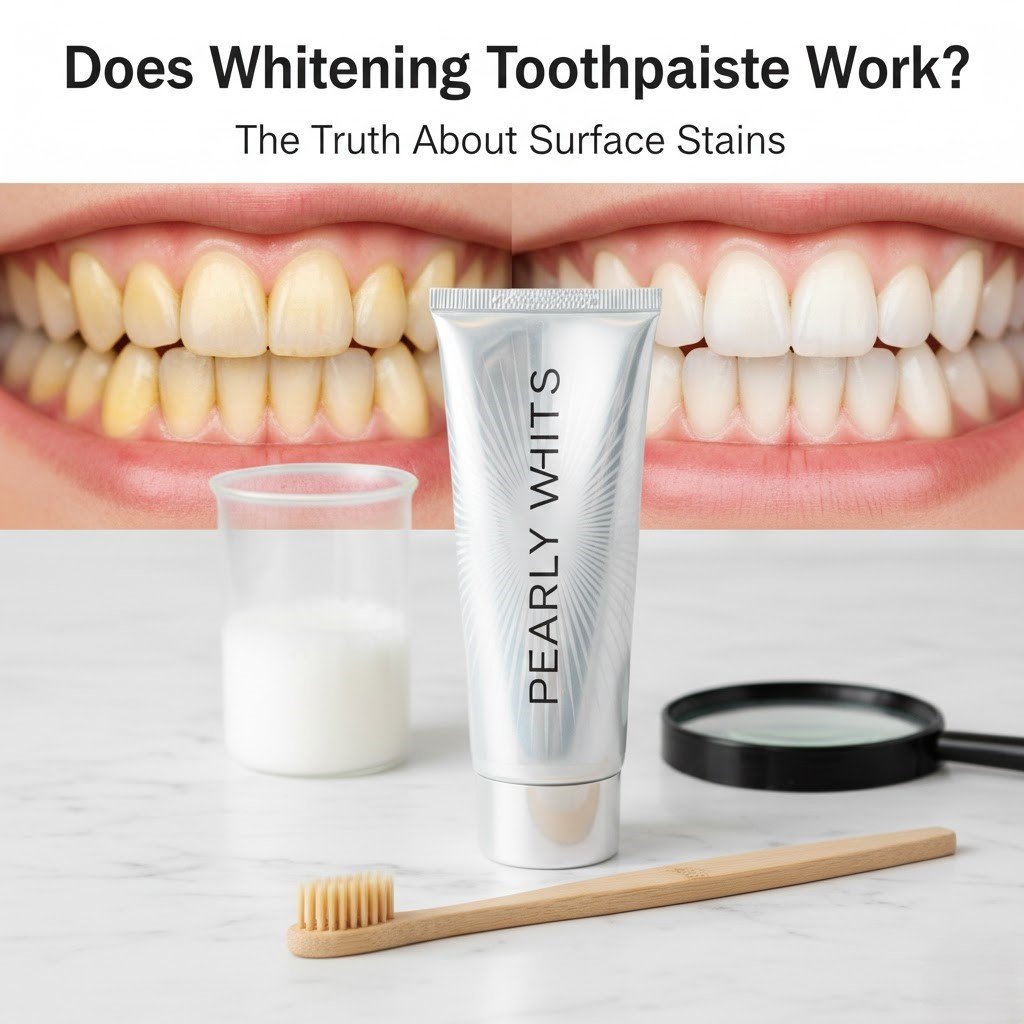
Does Whitening Toothpaste Work? The Truth About Surface Stains
Everyone wants a brighter, more confident smile. It’s no surprise that when wandering the oral care aisle, most of us reach for a tube that promises “visible whitening in three days.” But as you stand there, you probably wonder: does whitening toothpaste work, or is it just clever marketing?
The short answer is yes, but with a major catch. Whitening toothpaste can effectively remove surface stains from your morning coffee or evening wine, but it doesn’t actually change the genetic color of your teeth.
In this deep dive, we’ll explore the mechanical and chemical science behind these products, the potential risks to your enamel, and how to choose a formula that actually delivers results without causing permanent sensitivity.
Does Whitening Toothpaste Work?
To understand if these products work, we first have to distinguish between extrinsic and intrinsic stains.
Extrinsic stains live on the surface of the enamel. These are the dark spots caused by tobacco, tea, coffee, and dark berries. Whitening toothpastes work exceptionally well for these. By using mild abrasives and chemical surfactants, they scrub away the film that builds up on your teeth daily.
Intrinsic stains, however, are deeper. These occur inside the tooth structure (the dentin) due to aging, certain medications (like tetracycline), or trauma. Whitening toothpastes generally do not work for intrinsic stains. No matter how hard you brush, a toothpaste cannot penetrate deep enough into the tooth to change its base color. Only professional bleaching treatments involving high concentrations of hydrogen peroxide can do that.
How Whitening Toothpaste Functions: The Mechanism
Whitening toothpastes utilize three primary methods to brighten your smile:
- Mechanical Abrasion: Most “whitening” happens through physical scrubbing. Ingredients like hydrated silica, calcium carbonate, and baking soda act like tiny sandpaper particles. They polish the tooth surface to reveal the brighter enamel underneath.
- Chemical Disruption: Ingredients like sodium hexametaphosphate help break down the “pellicle”—the protein film on your teeth that attracts stains.
- Bleaching Agents: Some modern formulas (like Colgate Optic White) now include hydrogen peroxide or carbamide peroxide. While the concentration is much lower than professional kits (usually 1% to 5%), consistent use can provide a subtle brightening of the enamel itself.
Ingredients to Look For (And What to Avoid)
When shopping for the best whitening toothpaste, the ingredient list is your roadmap. Not all “whitening” products are created equal.
Key Effective Ingredients
| Ingredient | Function | Why It Matters |
| Hydrogen Peroxide | Chemical Bleach | The only ingredient that can potentially lighten intrinsic color. |
| Hydrated Silica | Mild Abrasive | Polishes surface stains without being overly destructive to enamel. |
| Sodium Fluoride | Enamel Protection | Essential to remineralize teeth after abrasive whitening. |
| Potassium Nitrate | Desensitizer | Helps soothe nerves for those with sensitive teeth. |
Ingredients to Use with Caution
- Activated Charcoal: While trendy, charcoal is often too abrasive. Research suggests it can wear down enamel over time, eventually revealing the yellowish dentin underneath—the exact opposite of your goal.
- Blue Covarine: This is an optical illusion. It deposits a thin blue film on the teeth to cancel out yellow tones. It works instantly, but the effect is temporary.
Expert Tip: Look for the ADA Seal of Acceptance. This ensures the toothpaste is evaluated for safety and that its whitening claims are backed by clinical data.
The Risk Factor: Can It Damage Your Enamel?
The most common concern with whitening toothpaste is Relative Dentin Abrasion (RDA). Every toothpaste is graded on an RDA scale.
- 0–70: Low abrasive (Safe for sensitive teeth)
- 71–100: Medium abrasive
- 101–150: Highly abrasive
- 150–250: Regarded as the upper limit of safety.
Many whitening toothpastes sit in the 100–200 RDA range. While safe for occasional use, using a high-RDA toothpaste twice a day for years can lead to enamel thinning. As your enamel thins, your teeth may actually start to look more yellow because the yellowish dentin inside becomes more visible.
Signs of Overuse
- Increased Sensitivity: Sharp pain when drinking cold water or hot coffee.
- Translucent Edges: The biting edges of your teeth look “see-through.”
- Gum Irritation: Redness or soreness along the gumline from harsh chemical agents.
Maximizing Results: A Practical Routine
If you want to use whitening toothpaste effectively, don’t just brush harder. Follow this dentist-recommended approach:
- Alternate Your Pastes: Use a whitening toothpaste in the morning to tackle stains from your breakfast, and a sensitivity or enamel-repair paste at night to remineralize your teeth.
- Use a Soft-Bristled Brush: High-abrasive paste combined with a “Firm” toothbrush is a recipe for gum recession.
- Wait After Eating: Acids in coffee and soda soften your enamel. Wait at least 30 minutes before brushing to avoid scrubbing away softened minerals.
- Manage Expectations: Expect a change of one to two shades at most. If you need a “Hollywood white” transformation, professional intervention is necessary.
FAQs
1. How long does it take for whitening toothpaste to work?
Most users see a difference in 2 to 6 weeks of twice-daily use. Formulas containing hydrogen peroxide may show results slightly faster than those relying solely on abrasives.
2. Can I use whitening toothpaste every day?
Yes, most are designed for daily use. However, if you experience sensitivity, you should alternate with a standard fluoride toothpaste or switch to a formula designed specifically for sensitive teeth.
3. Does it work on crowns, veneers, or fillings?
No. Whitening agents only work on natural tooth enamel. They will not change the color of porcelain, composite resin, or other dental restorations.
4. Why are my teeth still yellow after using whitening toothpaste?
This usually means your staining is intrinsic (inside the tooth) rather than extrinsic. Aging, genetics, or thinning enamel are common causes that toothpaste cannot fix.
5. Is baking soda better than whitening toothpaste?
Baking soda is a great, low-abrasive stain remover, but it lacks fluoride, which is essential for preventing cavities and strengthening enamel. It’s better to use a toothpaste that contains baking soda rather than raw baking soda alone.
Conclusion
- Whitening toothpaste is best for extrinsic stains (surface discoloration from food/drink).
- It cannot fix intrinsic stains caused by aging or internal tooth damage.
- Check the RDA score to ensure you aren’t wearing down your enamel.
- Ingredients like Hydrogen Peroxide are the most effective for actual color change, while Fluoride is vital for protection.
- Professional whitening remains the only way to achieve dramatic, multi-shade shifts safely.
By understanding the science of how these products interact with your enamel, you can make an informed choice that keeps your smile both bright and healthy.