
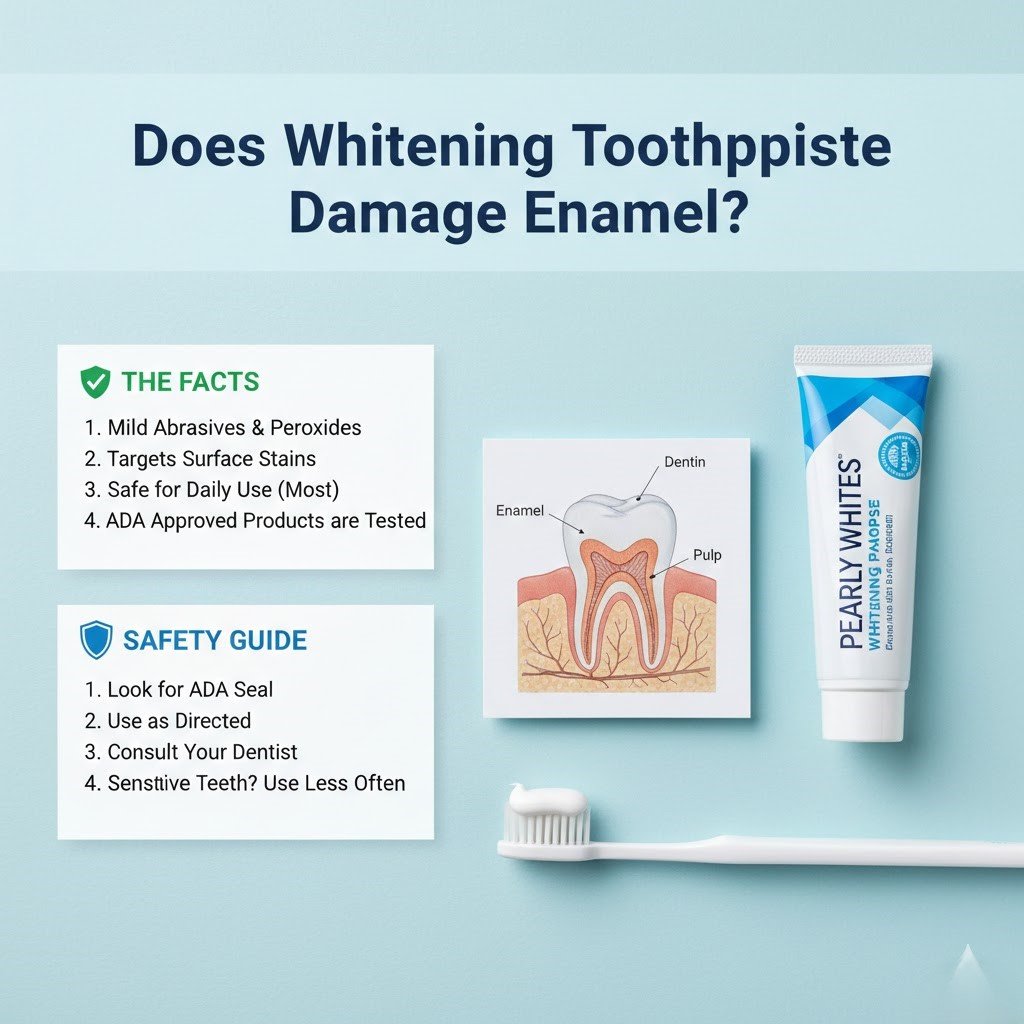
How to Whiten Your Teeth Without Damaging Enamel
We all want that radiant, “camera-ready” smile, but at what cost? In the quest for pearly whites, many of us reach for the most convenient tool available: whitening toothpaste. However, as sensitivity kicks in or teeth begin to look slightly translucent at the edges, a vital question emerges: Does whitening toothpaste damage enamel?
The truth is nuanced. While these products are regulated and generally considered safe for the general public, the way they interact with your unique dental anatomy can vary wildly. Understanding the difference between surface-level cleaning and structural erosion is the key to maintaining a healthy smile for a lifetime. In this guide, we will break down the science of dental abrasivity, identify the “red flag” ingredients, and show you how to brighten your smile without compromising your tooth’s most precious defense.
Understanding Enamel: Your Tooth’s Suit of Armor
Before we can answer if your toothpaste is a threat, we have to understand what it’s up against. Enamel is the thin, outer covering of the tooth. It is the hardest tissue in the human body—even harder than bone—but it has one major weakness: it cannot regenerate.
Once enamel is worn away by physical abrasion or chemical erosion, your body cannot grow it back. This leads to the exposure of dentin, the softer, yellowish layer underneath, which contains microscopic tubules leading directly to the nerves. This is why “whitening” too aggressively often leads to the very thing people want to avoid: yellow-looking, sensitive teeth.
How Whitening Toothpastes Work: Mechanical vs. Chemical
To determine if does whitening toothpaste damage enamel, we must categorize the two primary ways these products function:
1. Mechanical Abrasion (The “Scrubbing” Method)
Most over-the-counter whitening toothpastes contain small, gritty particles designed to polish away surface stains from coffee, tea, and red wine. These are known as abrasives. Common examples include:
- Hydrated Silica
- Calcium Carbonate
- Aluminum Oxide
2. Chemical Bleaching (The “Deep Clean” Method)
Some premium whitening pastes include low concentrations of hydrogen peroxide or carbamide peroxide. These chemicals penetrate the enamel to break down deeper stains. While effective, they can temporarily increase sensitivity by opening the pores of the enamel.
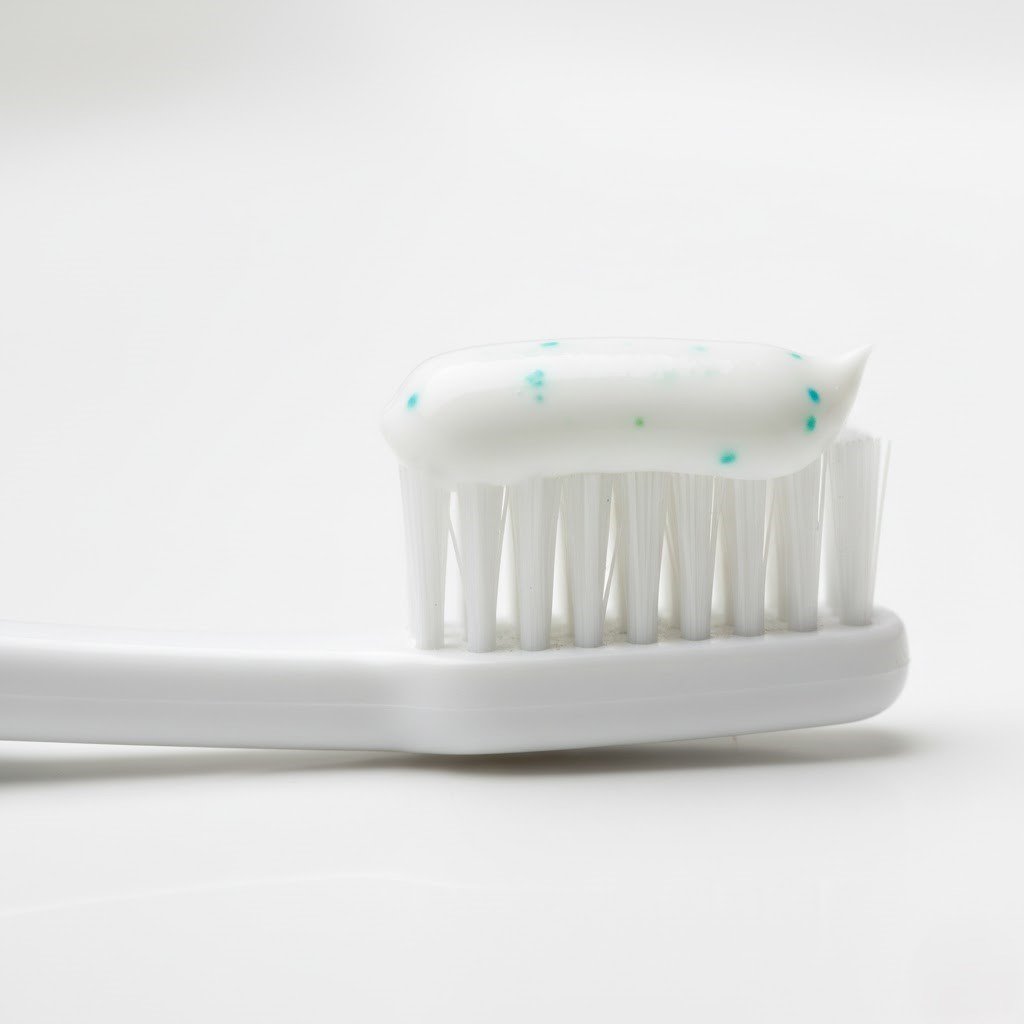
While abrasives help remove stains, their grit level (RDA) determines whether they are safe for your enamel.
The RDA Scale: The Secret Number You Need to Know
The dental industry uses a measurement called Relative Dentin Abrasivity (RDA) to rank how “rough” a toothpaste is. This is the definitive answer to whether a specific brand of whitening toothpaste damages enamel.
- 0–70 (Low Abrasive): Safe for everyone, even those with thin enamel.
- 71–100 (Medium Abrasive): Standard for most daily toothpastes.
- 101–150 (High Abrasive): Common for “intense” whitening brands; use with caution.
- 151–250 (Regarded as Harmful): These can cause significant enamel wear if used long-term or with a hard-bristled brush.
Most popular whitening pastes hover between 100 and 150. If you have naturally thin enamel or receding gums, using a high-RDA paste twice a day for years can lead to permanent damage.
Signs Your Whitening Toothpaste is Damaging Your Enamel
How do you know if you’ve gone too far? Your body provides several warning signs that your whitening routine is becoming destructive:
- Increased Sensitivity: If cold water or hot coffee sends a sharp pain through your teeth, your enamel may be thinning.
- Transparency: Look at the biting edges of your front teeth in a mirror. If they look “see-through” or bluish, the enamel is wearing down.
- Yellowing Appearance: Paradoxically, if your teeth look more yellow despite whitening, you may have worn away the white enamel, revealing the yellow dentin beneath.
- Rough Edges: Small chips or a “jagged” feeling on the edges of the teeth can indicate weakened structural integrity.
Read Our More Guides: Can You Use Whitening Toothpaste With Braces? Safety & Results
The Charcoal Trend: A Danger to Enamel?
In recent years, “activated charcoal” toothpaste has flooded social media. While it claims to be a natural alternative, many dentists are concerned. Charcoal is highly abrasive. Because charcoal particles are often larger and more irregular than the silica used in standard pastes, they can act like sandpaper on your teeth. Furthermore, charcoal can settle into cracks or around dental work, leaving dark outlines that are difficult to remove. Most importantly, many charcoal toothpastes lack fluoride, leaving your teeth vulnerable to decay.
How to Whiten Safely: The Expert Routine
You don’t have to give up on a bright smile. You simply need to change your strategy. Follow these “Enamel-First” rules:
- Check for the ADA Seal: Only use products that have been evaluated for safety and efficacy by the American Dental Association.
- Use a Soft Brush: A hard-bristled toothbrush combined with abrasive toothpaste is a recipe for disaster. Always use soft bristles and gentle, circular motions.
- The “Wait” Rule: Never brush immediately after eating acidic foods (like citrus or soda). Acid softens enamel; brushing while it’s soft increases the damage. Wait 30–60 minutes.
- Cycle Your Pastes: Use a whitening toothpaste for one month, then switch to a remineralizing toothpaste containing hydroxyapatite or fluoride for the next month to strengthen your “armor.
Professional Alternatives to Toothpaste
If you find that even the gentlest whitening toothpaste damages enamel in your case due to sensitivity, consider professional treatments.
While professional bleaching uses higher concentrations of peroxide, it is done in a controlled environment. A dentist can protect your gums and apply desensitizing agents that over-the-counter products lack. Often, one professional session is less damaging than 365 days of scrubbing with a high-abrasion toothpaste.
Making a Choice for Your Dental Future
Your smile is one of your most important assets, but its beauty should never come at the expense of its health. Enamel is the guardian of your teeth; once it’s gone, the complications can range from chronic pain to expensive restorative work. By choosing low-abrasive formulas and prioritizing remineralization, you can enjoy the best of both worlds: a bright smile and a healthy one.
FAQ: Protecting Your Enamel
1. Does whitening toothpaste actually remove enamel?
Technically, yes. If the toothpaste has a high RDA (abrasivity) score, it removes microscopic layers of enamel alongside the stains. Over years of use, this “thinning” becomes permanent.
2. Can I use whitening toothpaste every day?
For most healthy adults, daily use of an ADA-approved whitening paste is safe. However, if you have sensitive teeth or gum recession, you should limit use to a few times a week.
3. Is fluoride-free whitening toothpaste safe?
While it may whiten, fluoride-free toothpaste does not help remineralize the enamel. Without fluoride (or a substitute like hydroxyapatite), your enamel is much more susceptible to damage from whitening abrasives.
4. How can I tell if my toothpaste is too abrasive?
You can search for the “RDA Value” of your specific brand online. If it is over 150, it is considered highly abrasive and should be used sparingly.
5. Can damaged enamel be repaired?
Enamel cannot be “regrown,” but it can be “remineralized.” Products containing fluoride or hydroxyapatite can help redeposit minerals into weakened areas, making the existing enamel harder and less sensitive.
Conclusion
To wrap up, the answer to does whitening toothpaste damage enamel is: only if used incorrectly or if the product is too abrasive. Your teeth are remarkably resilient, but they are not indestructible. By being a conscious consumer—checking RDA scores, using soft brushes, and avoiding “fad” products like raw charcoal—you can maintain your dental health without sacrificing your confidence.
Practical Next Steps:
- Switch to a soft-bristled toothbrush today.
- Check the RDA score of your current toothpaste.
- Incorporate a remineralizing rinse into your nightly routine.
Invest in your enamel now, and your smile will remain bright and functional for decades to come.