
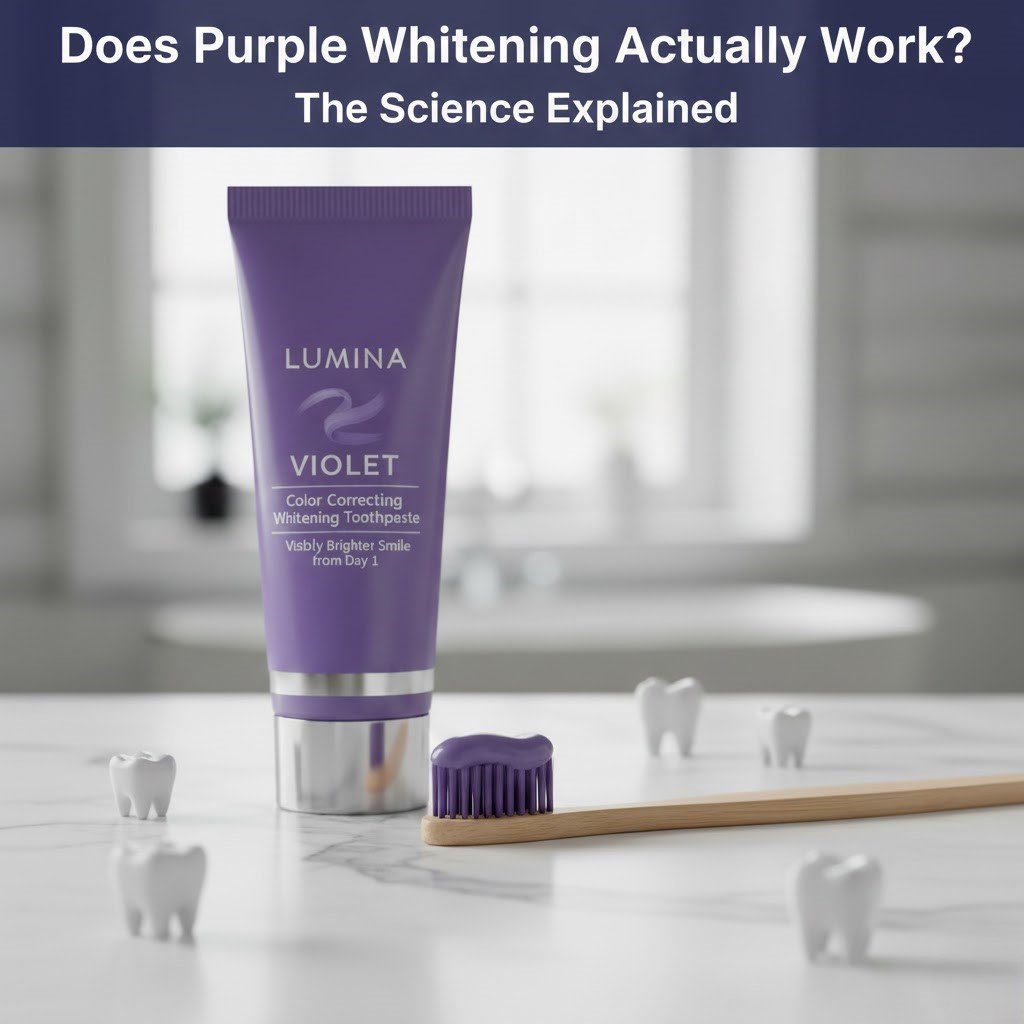
Does Purple Whitening Toothpaste Actually Work?
If you’ve spent more than five minutes on social media lately, you’ve likely seen a viral video of someone covering their teeth in a vibrant, violet-colored goo, only to rinse it away and reveal a blindingly white smile. It looks like magic, and it has millions of people asking the same question Does purple whitening toothpaste actually work, or is it just clever marketing and ring-light trickery?
The allure is obvious. Unlike traditional whitening strips that can take days to show results or professional bleaching that costs hundreds of pounds, purple toothpaste promises an instant transformation. But as with most things in the beauty and dental world that seem too good to be true, the reality is a bit more nuanced. To understand if this trend belongs in your bathroom cabinet, we need to dive into the world of color theory, stain types, and dental health.
The Science of Color Theory: Why Purple?
To answer whether purple toothpaste works, we have to look at the color wheel. If you remember primary school art class, purple sits directly opposite yellow. In the world of optics, opposite colors cancel each other out.
This is the same principle behind “purple shampoo” used by blondes to neutralize brassy, yellow tones in their hair. When you apply a purple pigment to a tooth that has a yellowish hue, the purple cancels out the yellow, creating a perceived white appearance.
This isn’t a chemical change; it’s an optical illusion.
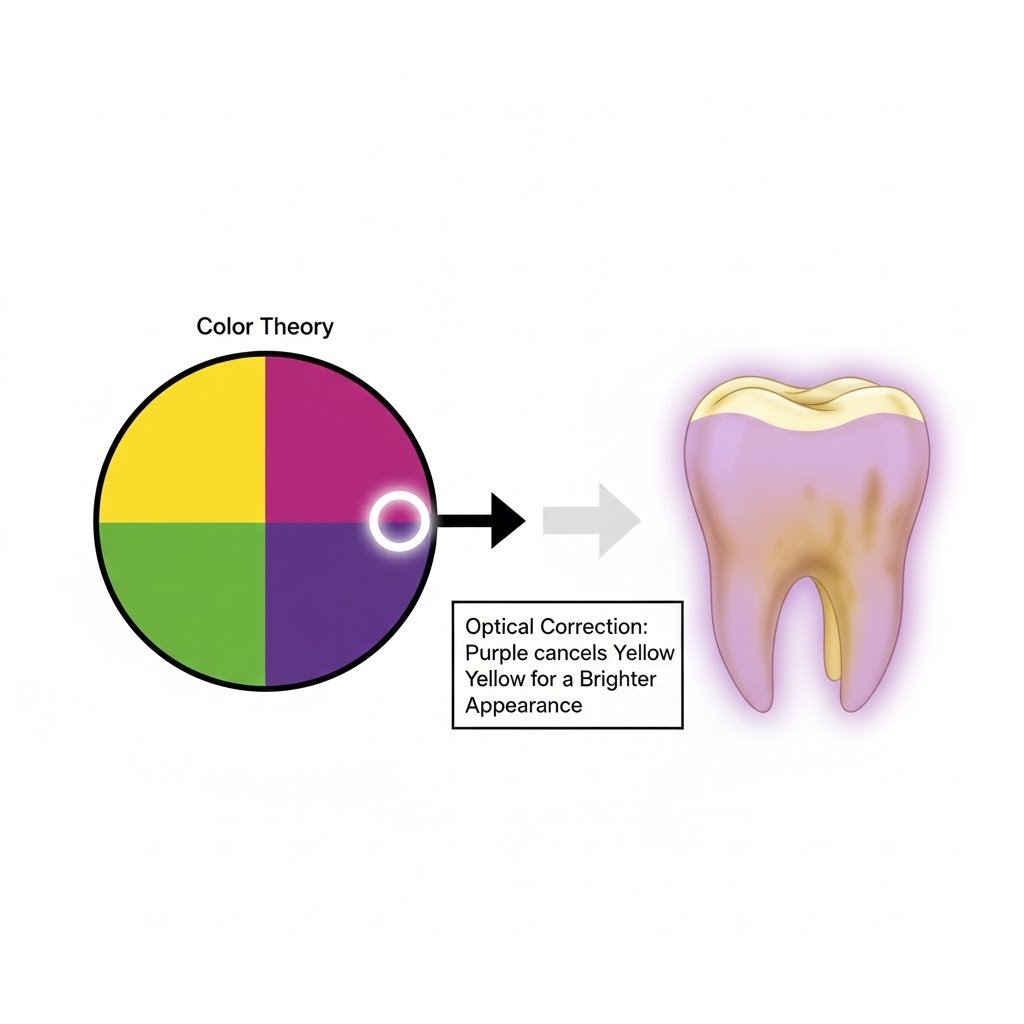
Color correction: Purple pigments neutralize yellow tones on the tooth surface to create a brighter appearance.
The Difference Between Color Correction and Bleaching
One of the biggest misconceptions is that purple toothpaste “whitens” in the same way peroxide does. It is vital to distinguish between mechanical whitening, chemical bleaching, and optical correction.
- Chemical Bleaching: Products containing hydrogen peroxide or carbamide peroxide penetrate the enamel to break down deep, internal (intrinsic) stains.
- Mechanical Whitening: Standard whitening toothpastes use abrasives (like silica) to scrub away surface (extrinsic) stains from coffee or food.
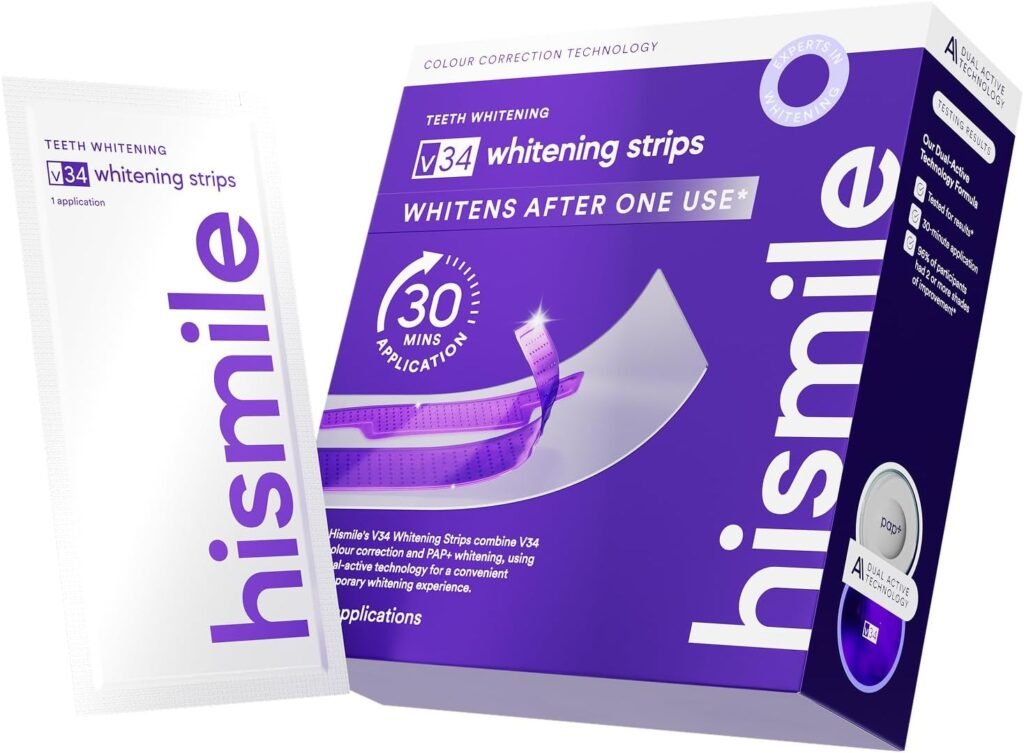
- Optical Correction: This is where purple toothpaste lives. It deposits a temporary dye on the surface of the tooth to mask yellow tones.
Does it remove stains?
Most purple whitening “serums” or “foams” are not actually designed to clean your teeth. In fact, many don’t contain fluoride or cleaning agents at all. They are intended as a finishing product to be used after you’ve already brushed with regular toothpaste. If you are looking to remove years of coffee buildup, a purple foam is unlikely to do the heavy lifting.
Secondary Keywords Analysis: What Else Should You Know?
When considering instant teeth brightening and non-peroxide whitening, purple toothpaste is often compared to other DIY methods. Let’s look at how it stacks up against common alternatives:
| Feature | Purple Toothpaste | Whitening Strips | Charcoal Toothpaste |
| Active Method | Color Correction (Dye) | Bleaching (Peroxide) | Abrasion (Scrubbing) |
| Results Duration | Hours (Temporary) | Weeks/Months | Daily Maintenance |
| Sensitivity Risk | Very Low | Moderate to High | Low (but Enamel Wear risk) |
| Primary Benefit | Instant Brightness | Deep Stain Removal | Surface Stain Removal |
Who is Purple Toothpaste Best For?
Because of how it works, does purple whitening toothpaste actually work for everyone? The short answer is no. Its effectiveness depends entirely on the current shade of your teeth.
- Post-Treatment Maintenance: It is excellent for people who have recently had professional whitening and want to cancel out the slight yellowing that returns between treatments.
Special Events: If you have a wedding, a photoshoot, or a big date, the instant optical brightening can give your smile a temporary “pop.”
Naturally Yellowish Teeth: If your enamel has a naturally warm or yellow undertone, the purple pigment will be most effective.
Veneers and Crowns: Surprisingly, because it’s a surface pigment and not a bleach, it can help brighten the appearance of dental work that has picked up surface yellowing (though results vary).
When It Won’t Work
If your teeth are greyish or brownish (often caused by certain medications like tetracycline or trauma), purple toothpaste will do almost nothing. The color theory only works to cancel out yellow. Furthermore, if you have significant plaque or tartar buildup, the purple dye may “clump” around the debris, making your teeth look blotchy or even slightly blue in certain lights.
Expert Perspective: Is It Safe?
From a clinical standpoint, purple whitening toothpastes are generally very safe because they lack the harsh chemicals found in high-concentration bleaching gels. However, there are two “Trust” factors you should keep in mind:
- The Lack of Fluoride: Many viral purple serums are not toothpastes in the traditional sense. They do not protect against cavities. If you replace your regular fluoride toothpaste with a purple serum, you are putting your dental health at risk.
- Managing Expectations: The most significant “harm” of these products is to your wallet if you expect permanent results. The effect typically lasts only a few hours or until you next eat or drink.
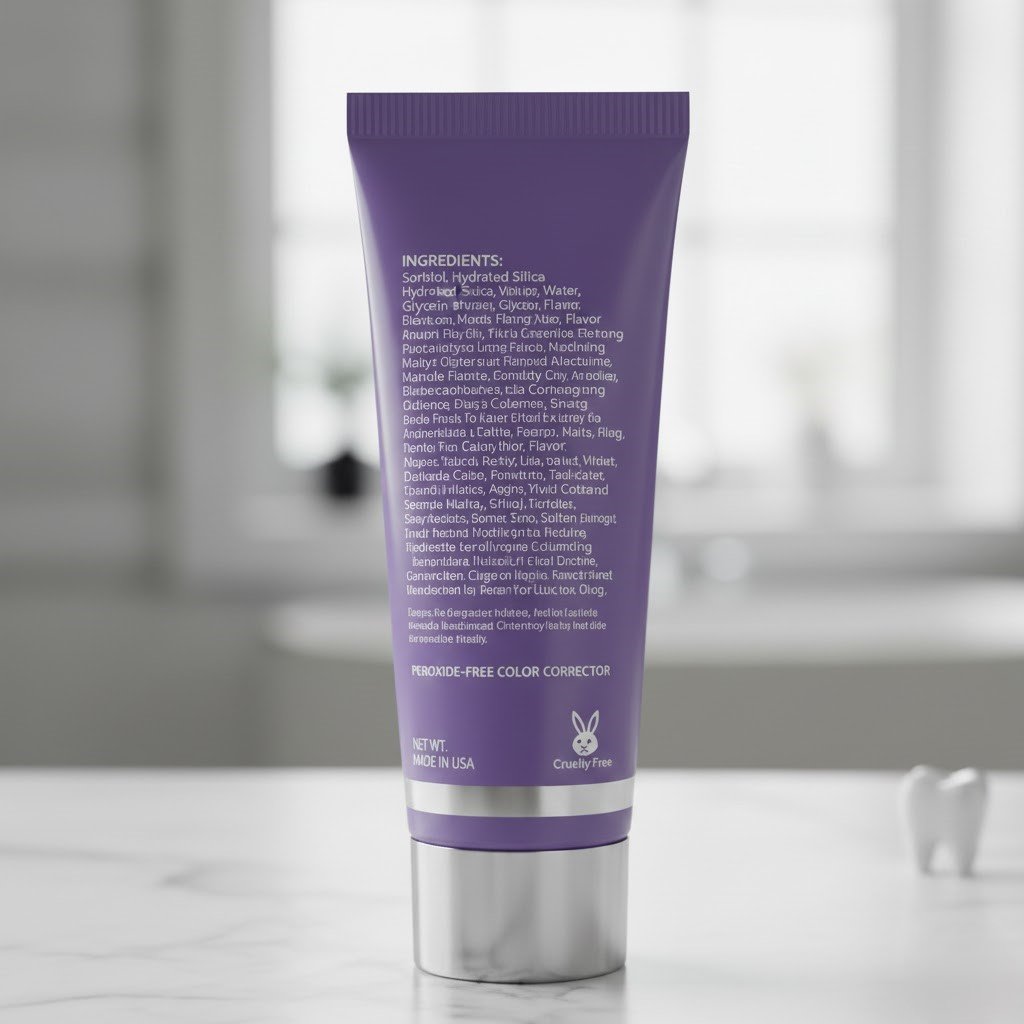
Caption: Most purple toothpastes are peroxide-free, making them safe for those with extreme tooth sensitivity.
Step-by-Step: How to Use Purple Toothpaste for Best Results
If you decide to try it, don’t just use it like regular toothpaste. Follow this “pro” routine to maximize the optical effect:
- Brush Normally First: Use your standard fluoride toothpaste to remove plaque and food particles. The purple pigment needs a clean surface to stick to.
- Apply the Purple Serum: Use a pea-sized amount. You can brush it on for 30 seconds or even “paint” it onto your most visible teeth.
- Rinse Lightly: Don’t over-rinse. You want just enough of the pigment to stay behind to counteract the yellow tones.
- Check the Lighting: These products look best in natural light or “cool” indoor lighting.
The Verdict: Hype vs. Reality
So, does purple whitening toothpaste actually work? Yes, but only as a cosmetic concealer, not a permanent whitener. Think of it as “makeup for your teeth.” Just as foundation hides redness on your skin without changing your skin permanently, purple toothpaste hides yellow tones on your teeth for a few hours.
For many, this is exactly what they need—a quick, sensitivity-free boost before a big event. For those looking for a long-term change in the color of their smile, you will still need to look toward peroxide-based treatments or professional dental services.
Check out our guide on: Is Whitening Toothpaste Bad for Your Teeth?
FAQ: Purple Toothpaste Edition
Does purple toothpaste actually work on deep stains?
No. Purple toothpaste only affects the surface of the tooth using color correction. Deep, internal stains caused by age, smoking, or medication require professional chemical bleaching to resolve.
Can I use it if I have sensitive teeth?
Yes! Since most purple toothpastes are peroxide-free and don’t rely on heavy abrasives, they are one of the safest options for people who experience “zings” or pain with traditional whitening strips.
How long do the results last?
The whitening effect is temporary and usually lasts anywhere from a few hours to a full day, depending on how much you eat, drink, or talk.
Will it turn my gums purple?
If used in excess, you might notice a temporary tint on your gums or tongue, but this usually fades quickly after rinsing or drinking water.
Is it better than whitening strips?
It isn’t “better,” just different. Whitening strips provide a permanent (though gradual) change to the tooth color. Purple toothpaste provides an instant (though temporary) change.
Can I use purple toothpaste on dental implants?
Yes, it is safe for implants, crowns, and veneers. It won’t change the color of the material, but it can help neutralize surface yellowing just as it does on natural teeth.
Conclusion: Should You Buy It?
The craze surrounding purple whitening toothpaste is a testament to our collective desire for a brighter smile without the hassle of sensitivity or high costs. Does purple whitening toothpaste actually work? It absolutely does—provided you understand it is a temporary cosmetic fix rather than a permanent dental treatment.
- It’s Color Correction: It uses violet pigments to neutralize yellow tones.
- It’s Temporary: Expect the results to last for hours, not weeks.
- It’s Safe: Great for sensitive teeth and as a “finishing” product.
- It’s Not a Cleaner: Continue using fluoride toothpaste for your actual dental hygiene.
If you want a “filter” for your teeth in real life, go for it! But if you want a smile that stays bright long after the purple pigment has washed away, consider speaking with a professional about a tailored whitening plan.