
How Long Does Whitening Toothpaste Take to Work?
The promise of a brighter, whiter smile is everywhere—on billboards, social media, and every second tube in the dental aisle. When you buy a new tube of “Advanced White” or “Optic Shine,” the first thing you want to know is: how long does whitening toothpaste take to work?
We live in an age of instant gratification, but dental health follows the rules of biology, not technology. Unlike a filter on a smartphone, changing the shade of your teeth involves interacting with organic stains and mineralized tissue. If you’ve been brushing for three days and haven’t seen a difference, you aren’t alone. In this comprehensive guide, we will break down the realistic timelines, the science of stain removal, and the factors that might be slowing down your progress.
The Realistic Timeline: What to Expect
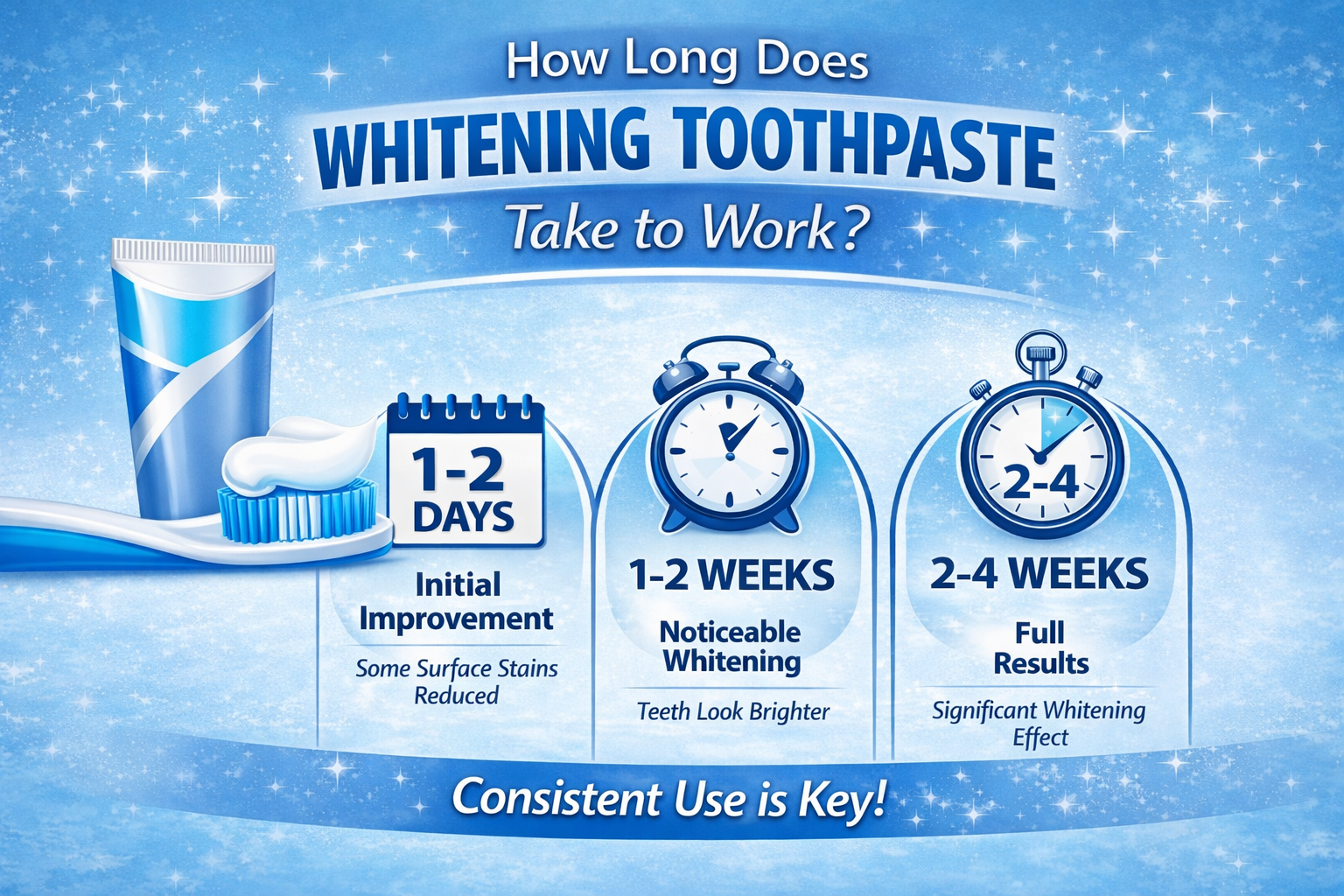
If you are looking for a quick answer, most dental professionals and clinical studies suggest that you will begin to see noticeable results in two to six weeks.
However, this isn’t a “one size fits all” answer. The speed of the process depends heavily on the type of toothpaste you are using and the nature of the stains you are trying to remove.
The Immediate “Optical Illusion” (Instant)
Some modern toothpastes contain a chemical called blue covarine. This doesn’t actually remove stains; instead, it adheres to the surface of the teeth and changes the way they reflect light. Because blue cancels out yellow tones, your teeth may appear whiter after just one brush. While this is a great “quick fix,” it is temporary and doesn’t represent actual whitening.
Surface Stain Removal (1–2 Weeks)
If your toothpaste uses mild abrasives like silica or calcium carbonate, you are performing mechanical whitening. You should see the dullness of coffee or tea stains start to fade within 7 to 14 days of twice-daily brushing.
Deep Chemical Whitening (4–6 Weeks)
Toothpastes that contain hydrogen peroxide or carbamide peroxide actually penetrate the enamel to break down intrinsic stains. Because the concentration of peroxide in toothpaste is very low (usually 1–3%) compared to professional treatments (20–40%), this process is slow. You typically won’t see these deeper results until you’ve reached the one-month mark.
Factors Influencing How Long Does Whitening Toothpaste Take to Work
Several variables can either accelerate or stall your journey to a whiter smile. Understanding these can help you manage your expectations and adjust your habits.
1. The Type of Stains
- Extrinsic Stains: These are on the surface, caused by lifestyle choices like smoking, coffee, or red wine. Whitening toothpaste is highly effective against these and works relatively quickly.
- Intrinsic Stains: These are inside the tooth, often caused by aging, certain medications (like tetracycline), or excessive fluoride during childhood. Whitening toothpaste often struggles to remove these, and if it does, it will take the full six-week cycle or longer.
2. Concentration of Active Ingredients
Not all “whitening” labels are created equal. A paste with 3% hydrogen peroxide will produce results significantly faster than one that relies solely on abrasives. Always check the active ingredient list to see if the product is chemically bleaching or just mechanically scrubbing.
3. Your Brushing Technique
Consistency is key. If you only brush for 30 seconds, the active ingredients don’t have enough “contact time” with your enamel to be effective. Most dentists recommend brushing for a full two minutes to allow the whitening agents to do their job.
4. Your Diet During Treatment
If you are trying to whiten your teeth while continuing to drink three cups of black coffee a day without rinsing, you are effectively “running on a treadmill.” You are removing stains at the same rate you are applying them, which can make it seem like the toothpaste isn’t working at all.
Comparison Table: Whitening Methods and Speed
| Method | Key Ingredients | How Long to Work? | Result Depth |
| Whitening Toothpaste | Silica, Low Peroxide | 2–6 Weeks | Surface |
| Whitening Strips | 6–10% Peroxide | 5–10 Days | Surface & Mild Deep |
| Take-Home Trays | 10–20% Peroxide | 1–2 Weeks | Deep |
| In-Office Treatment | 25–40% Peroxide | 60 Minutes | Maximum Deep |
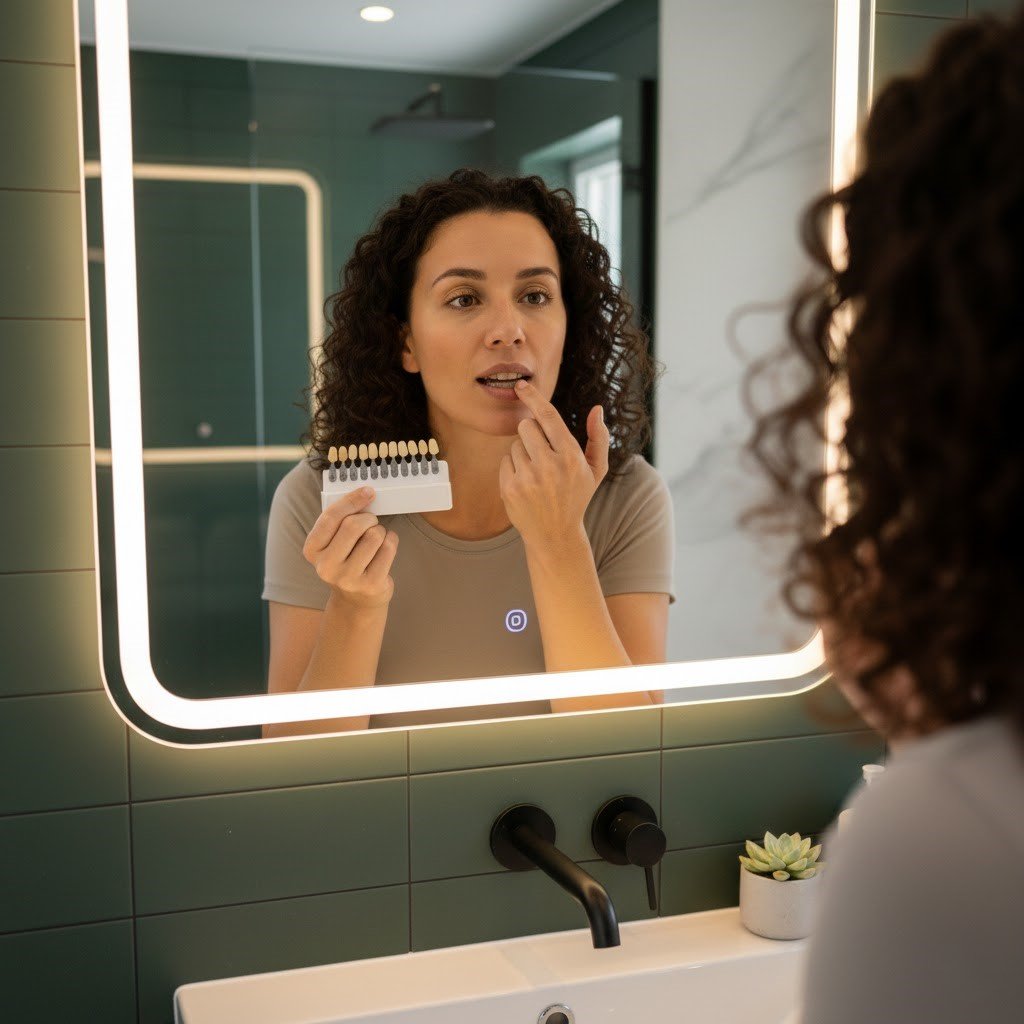
Tracking your progress with a shade guide can help you see subtle changes over the 2–6 week period.
The Risks of Chasing Fast Results
When people feel that their toothpaste is taking too long, they often make the mistake of brushing harder. This is a dangerous habit.
Over-brushing with abrasive whitening toothpaste can lead to enamel erosion. Enamel is the protective outer layer of your tooth; once it’s gone, it doesn’t grow back. As the enamel thins, the yellowish dentin underneath becomes more visible, which actually makes your teeth look more yellow—the exact opposite of your goal.
Furthermore, aggressive whitening can cause gum recession and tooth sensitivity. If you feel a sharp zing when drinking cold water, it’s a sign you need to slow down and perhaps switch to a “sensitive” whitening formula.
How to Speed Up Your Whitening Results Safely
While you can’t force the peroxide to work faster, you can optimize your routine to ensure you get the best results in the shortest possible time.
- Use a Power Brush: Electric toothbrushes provide more strokes per minute than manual brushing, helping to break up surface pellicle (the film where stains live) more efficiently.
- The “Sip and Rinse” Rule: If you drink tea, coffee, or soda, rinse your mouth with plain water immediately afterward. This prevents the pigments from settling into the pores of your enamel.
- Dry Brushing First: Some experts suggest “dry brushing” (without toothpaste) for 30 seconds first to remove the bulk of plaque, allowing the whitening toothpaste to have direct contact with the enamel.
- Wait After Eating: Acids in food soften enamel. Wait at least 30 minutes after eating before using a whitening toothpaste to prevent unnecessary wear.
Read Our guide On: Can Kids Use Whitening Toothpaste? Dental Safety Guide for Parents
Why Isn’t My Whitening Toothpaste Working?
If you’ve been using a product for over two months and see zero change, one of the following may be true:
- You Have Dental Restorations: Crowns, veneers, and fillings do not whiten. If your “yellow” teeth are actually old composite fillings, toothpaste will not change their color.
- Gray vs. Yellow Tones: Whitening products work best on yellow-toned teeth. If your teeth have a gray or brownish hue (often due to medication or genetics), over-the-counter products are rarely effective.
- Thin Enamel: If your teeth are naturally translucent, the “yellowness” you see is the internal dentin. Whitening the surface won’t help because the color is coming from the inside out.
Maximizing Your Long-Term Smile
Consistency and patience are the hallmarks of a successful whitening journey. While a tube of toothpaste is an excellent, cost-effective way to maintain a bright smile, it is a “slow and steady” tool. It is designed to be part of a lifelong hygiene routine rather than a one-off transformation.
If you find that your progress has plateaued or if you’re looking for a more dramatic shift in your smile’s brightness, it may be time to seek a professional evaluation. A dental professional can identify the source of your staining and recommend a treatment plan that delivers results faster and more safely than any over-the-counter product.
FAQ: Whitening Toothpaste Timelines
1. Can I use whitening toothpaste twice a day?
Yes, most whitening toothpastes are formulated for daily use. However, if you experience sensitivity, you should switch to a standard fluoride paste for one of your brushing sessions.
2. Does whitening toothpaste work on coffee stains?
Yes, coffee stains are “extrinsic” (surface) stains. Whitening toothpastes are particularly effective at removing these, usually within 2 to 3 weeks of consistent use.
3. Why does my toothpaste say “instant results”?
Products claiming instant results usually contain optical brighteners like blue covarine. This creates a temporary visual change but does not physically remove or bleach the stains.
4. Is it safe to use whitening toothpaste long-term?
It depends on the RDA (Relative Dentin Abrasivity) of the paste. Some whitening pastes are very abrasive and can thin enamel over years of use. It is often best to “cycle” your whitening toothpaste—using it for one tube and then switching to a remineralizing paste for the next.
5. How long do the results of whitening toothpaste last?
The results last only as long as you maintain your habits. If you stop using the paste and continue consuming staining foods, your teeth will likely return to their original shade within a few months.
Conclusion
Understanding how long does whitening toothpaste take to work is essential for avoiding the disappointment of “miracle” marketing. By setting a realistic window of two to six weeks, you can track your progress accurately without resorting to aggressive brushing that might damage your enamel.
- Surface stains fade in 1–2 weeks.
- Deep whitening (with peroxide) takes 4–6 weeks.
- Optical brighteners provide a temporary effect in one brush.
- Consistency and avoiding staining foods are the best ways to speed up results.
A white smile is a sign of health and confidence, but the foundation must always be healthy enamel. Be patient with the process, and your smile will reflect the care you put into it.